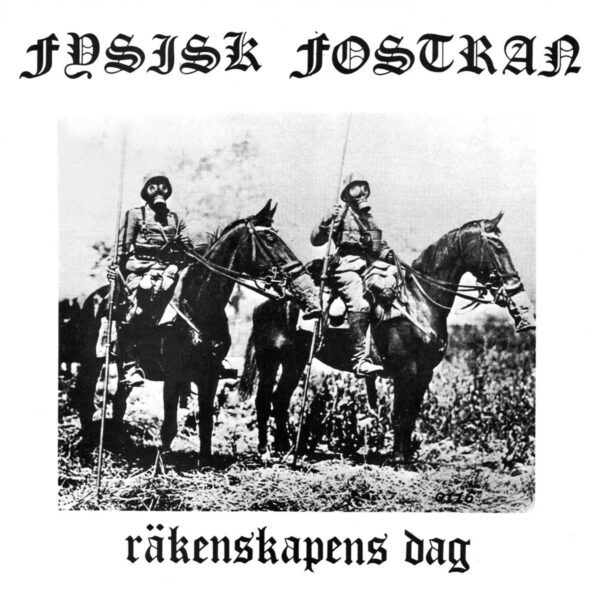
For a glimpse into a local post-punk noise industrial music scene in an obscure part of Sweden in the 1980s, tune into the LP Räkenskapens Dag (FÖRDÄMNING ARKIV F-ARKIV 12) by Fysisk Fostran as soon as humanly possible. Two sides of DIY home-made heavy thrash, intense vocal howlage, electronic whooping mayhem, and demented chaotic playing abound across these eleven electrifying cuts, some of them recorded at home and some on stage, between the years 1980 and 1984.
The main instigators of this teenage rebellion seem to have been Patrik Lager and Robert Lagerström, while those credited on the back cover are Mano, Fader Rotting, Kempe, Boris, Alexanger McGinthy and Landguden (one or two of these names might be aliases for our two visionary heroes). This was all taking place in a cultural wasteland – no disrespect to the town of Stenungsgund or its populace, but this particular locale doesn’t seem to have been a particularly life-affirming area in the 1980s, with its 1960s petrochemical plants dominating the landscape, and said plants cornering all the employment prospects too. I’m taking my cue from the notes here by Marko Gillingsmark, who has a record label and a fanzine called Levande Begravd in Goteborg, and is not only well-informed but paints a vivid picture in his punchy essay, pretty much affirming that teenage boredom and despair are the forces that led to this angsty, disaffected, powerful music. Indeed, Robert Lagerström confirms that the sound of the factory machines (where he took summer jobs) fed directly into every note of music he made.
Gillingsmark tells a compelling tale of how exciting post-punk culture was brought across from London in the form of records by Throbbing Gristle, Chrome, and Fad Gadget, plus a dash of Stockhausen on the side, leading to an experimental music subculture in Stenungsgund; I’m not sure if we can say it was “thriving”, but there was enough going on in underground venues and word of mouth to start swelling the ranks of the Fysisk Fostran collective. Cassettes played a part in this exchange, as did the largesse of the welfare state; the band were pretty much given a run-down old building for nothing, and used it as a rehearsal space and venue. Later it was demolished by the same state powers that had donated it, as things took a bad turn for the band – violent clashes with skinheads and greasers at live events, and a record company declining to press their “wrong-sounding” EP.
If you’re thinking all of this milieu was a fertile petri dish for the breeding of rare European noised-up microbes, you’d be 100% correct; mere moments after clicking the needle on side one, you’ll be hooked into this strange world of inchoate teenage naivety, a virtual cult with very little contact with the outside world or even with like-minded bands / musicians in the vicinity. I absolutely love it, and would personally wish for an entire boxed set of such insane untutored rawness, although it might be this LP is all that has survived from that brief moment in the lives of Patrik Lager and Robert Lagerström and their compadres. Here’s a record that’s easily on a par with that reissue of Musiikkivyöry (Mika Taanila), who was exhibiting not-dissimilar anti-social and concrete tendencies in 1980-1981 in the Finnish underground. He was just 15 years old at the time.
It’s quite plausible to suggest at this point that teenagers always make the best music, especially if they’re sufficiently disaffected and strong-minded enough to run wild with their worst impulses, and overcome anything that might be blocking their free expression. How much healthier and more creative (I would say) to bark it all out in the form of primitive rhythmic noise like this, than to have all your teenage energy drained by bad actors creeping in and out of your smartphone and whispering intellectual contraband in your ears. An essential listen!! From 17 November 2023.