Tagged: improvised

Unfolk + Live Book: psychedelic journey and call for justice in folk music adventures

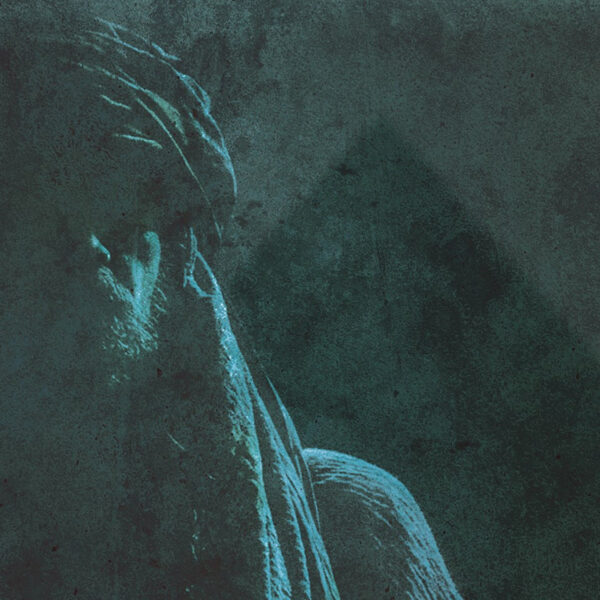
Alessandro Monti, Unfolk + Live Book, Diplodisc, 2 x CD DIPL 005/6 (2012)

News reached me the other day of a young software engineer Amanda Ghassaei who etched a Radiohead album with a laser cutter on a wooden disc. She’s also etched other audio recordings onto acrylic and paper. Phooey, you all say, a wooden music-playing record has been made before. WHAT?! I had to find out and sure enough one Heracleum Ipotesis had done it way back when in the High Middle Ages to preserve his “unfolk” music compositions – or so says one Alessandro Monti who with his Unfolk Collective music combo have had their “Unfolk” album from 2006 remastered and reissued with a bonus CD of reworked songs from a previous album “The Venetian Book of the Dead”.

Most tracks on the remastered “Unfolk” disc might have Italian-language titles but the music draws influences from Irish folk music traditions, Indian ragas, Arab and Venetian mediaeval Venetian lute music among other music genres. The journey through the disc is an interesting one: it’s as much a tour through Western contemporary popular music turns on “folk” and tracks like “Aerofolk” feature mind-expanding space cosmic music played on electric guitar, synthesiser and other electronic keyboards, giving a soundtrack that wouldn’t be out of place in the corpus of works by the likes of Can or Amon Düül 2. Speaking of “Aerofolk”, I think that’s becoming my favourite track here the more I listen to it for its sense of wide-eyed wonder and joy in exploring inner and outer space. Generally the happier the music on the album sounds, the better it is; the music that’s melancholy, brooding or contemplative tends to come across as a bit ordinary. One curious coincidence I note is that the violin melody on track 11 matches, note for note, the violin tune on Swedish 1970s space / folk rock group Älgarnas Trädgård’s song “Children of Possibilities” from that band’s first album; I think it’s likely both bands have used the same mediaeval tune.

Disc 2 “Live Book” sees a different set of musicians around Monti playing live in Mestre near Venice and in Leicester in 2011. About half the tracks from “The Venetian Book of the Dead”, referring to the workers and people who lost their lives to cancer and other diseases as a result of industrial accidents in areas around Venice and Mestre during the 1970s and 1980s, appear here. Subordinate to the lyrics, the music adopts moods appropriate to their message: dark, smoky and urgent (“Someone is always screwing someone”) and blunt, blaring and impassioned (“Forgive”). The best track here though is an excursion into a nostalgia for various 20th century music genres that had their roots in Afro-American oppression, poverty and despair: “Bedroom discotheque” gets its soulful, wistful emotion from the beautiful acoustic guitar and electric cello melodies and changes in key that bring on an extra layer of dark desperation to vocalist Kevin Hewick’s singing. Through repetition of the lyrics, Hewick tries to push back an enormous and relentless advance of ice that threatens to wipe out an entire structure of music historical and cultural memory. His lyrical venture into hiphop seems awkward and ill-advised though, as if he can’t quite figure out how this music, born in poverty and violence-ridden ghettoes, and others like it came to be unashamed whores for the global music industry. The music is a mix of unfolk, blues and rock with a slight dominance by electric guitars and other electrified musical instruments.

Some very good music is featured on both discs but there are also passages of quite stodgy instrumental music, especially on the latter half of Disc 2 where the music takes a more pessimistic and embittered turn with tracks like “The radioactive man”. Monti’s quest for social justice in his music hasn’t quite reached the stage where he might start tackling the true sources of oppression in our society, going after banks in their usurpation of control of global economies and their links with corporations across the world including the arms industry,  and the media, both “conservative” and “progressive”, alike for pulling huge chunks of wool over our eyes; and then generally calling for people to take back their power and do whatever they can under their control, no matter how small or petty, to create or recreate a fair world. I’m hoping he’s moving in that direction.

In an age in which most music produced these days is under the thumb of global media corporations and even the music of traditional societies from the past or in the current present is shaped and packaged by the music industry as an endless array of exotica, divorced from its original contexts, for consumption by tourists, Monti’s concept of unfolk music may be intended as a challenge to such concepts.


Foreign Greys

Fukushima! (PRESQU’ILE RECORDS PSQ004-2) is a compilation themed on the Japanese nuclear disaster of 2011, caused by an earthquake and leading to multiple reactor meltdowns. Otomo Yoshihide went on a lecture tour to raise awareness, and his appearance at the University of Tokyo in April 2011 was the direct inspiration for this two-disc set. I would imagine that Otomo gave a very direct, honest and impassioned account of the situation, if his music is anything to go by. He doesn’t appear on the compilation, but there is much modern avant performed music to savour. Disc two is dominated by star players from the Berlin reduced improv sphere, notably Burkhard Beins, Annette Krebs and Ingar Zach, plus similar minimalists Mark Wastell, Greg Kelley and Michael Pisaro. Their accumulated tracks put the listener in a suitably sober mood, and are politically contextualised by Krebs’ field recordings of a Berlin street demonstration. The main event is on disc one, a 34-minute John Tilbury piano solo from a composition by Dave Smith. It’s like listening to a very coherent argument made by an intelligent and assured wise man, which is exactly what it is. There’s also some alarming tones from Magda Mayas and a superbly baffling performance from Joe Foster of English with the Korean players Jin Sangtae, Hong Chulki and Choi Joonyong. Overlong, uneven, but this fund-raising comp is in a good cause. (19/07/2012)

Psykisk Tortur are the Norwegian combo, currently down to a duo of founder member Nicolaysen and Ronny Waernes, missing original member Tore Nilsen. When these maniacs began their unholy career in 1984 they became notorious for physically dangerous performances involving industrial machinery and metal percussion, thus aligning themselves with the early Faust, Hanatarash, and Einstürzende Neubaten – and although I’m not sure if the Norwegians ever succeeded in destroying any venue in which they played, they were certainly in receipt of numerous banning orders and they never ate lunch in Bodø again. On Nightrider (GO TO GATE RECORDS GO TO CD 022), their intense noise has mutated into a grotesque form of heavy metal rock, where mad electronic gibberish takes the place of squealing guitar solos, and the drumming is every bit as intense as a thousand Slayer tribute bands. It’s especially memorable when a “song” is attempted, as on ‘Stille Er Morgen’, where the monotonous chant is solemnly intoned against an insane cataclysm of heavily-distorted amplified wildness and remorseless drumbeats. Those who crave more outright “experimental” noise are advised to spin ‘Lettmetall’ to experience the more free-form tendencies of this powerful team, while rest of album is sufficient to satisfy any crazed Napalm Death fans. Very percussive and metallic throughout; the album virtually builds an iron suit around your whole body while you wait. As Robert Pepper astutely noted, “Psykisk Tortur rules!” (06/07/2012)

Matt Earle is an Australian musician and label owner, who has improvised with Guthrie and Guerra in his home country and recorded electronic music as part of Stasis Duo. Muura is his solo outlet, and the object simply titled Tape (ORGANIZED MUSIC FROM THESSALONIKI T19) is a cassette of process drone music that crawls from the speakers like over-baked ectoplasm escaping a desert climate. It’s built up from layered recordings of by-products of the electric guitar, including amplifier hum, feedback, and other “mistakes” generally considered undesirable by normal men. From this swamp of friable material, Muura impressively manages to build a hefty brick wall – a compelling experience of solid, throbbing abstract sound. The B side may have employed the same processes, but is somehow hollowed out and subtracted to create an extremely bleak and negative effect. Ultra-drone. (19/07/2012)

We last noted the Irish noise duo Safe in late 2010 with their Bare Life release. Now here’s their fifth item Crop (DOTDOTDOT MUSIC DOTDOTDOTCD010), where Hegarty and O’Shaugnessy supplement the group with four collaborators who add guitars, synth and toy instruments to the melee on this live recording. And it’s a continuous 40-minute assault, so civilians should approach this toxic area with caution. What may appear at first to be an indistinguishable howl of unpleasant frequencies slugging it out inside a tight arena of hate will reveal itself to be much more complex, and as deep as an aquarium filled with unusual marine life. The usual relentless Merzbow-chug power blast which Safe favour has been slightly subdued to act as a rhythmical backdrop to the instrumental lines of Langan, Condon, O’Brien and Lynch, guitar and synth eruptions which mew most plaintively. When you get this many noiseicians gathered together in a live situation, it can sometimes be a guarantee of unlistenable, sloppy chaos. But the musicians here reverse that trend, cohering strongly and sustaining interest unflaggingly for all 40 minutes. (24/07/2012)

Horn Beam Fantasmas


Loopy and intense noisy jazz rock blurt from Cactus Truck, a trio which showcases the saxophone malarkey of John Dikeman as much as the tangled guitar lines of Jasper Stadhouders, while drummer Onno Govaert urges these two rabid loons to propel themselves over the cliff edge. Their album Brand New For China! (PUBLIC EYESORE NO. 119) has a ten-minute opening salvo which will let the listener know instantly if they’ve the stomach to stick around for more of the same. These “spiky” fellows have caused much agitation in and around Amsterdam where they are based (this was recorded in a Netherlands studio), but many improvisers and veteran jazzmen on the international circuits also tip their hats to Cactus Truck. They make sure to put on gardening gloves first, though. I’d like to report a melange of Albert Ayler lines on top of Beefheartian blues rhythms, but their ultra-aggressive music favours surface sound and technique over structure. Not that you’ll notice as you succumb to the joyous free energy on offer here. (09/07/2012)

From the Belgian duo NDE we have Kampfbereit (COLD SPRING RECORDS CSR146CD), their second release which in typography and cover art at least is “disguised” as a Black Metal album, but turns out to be a wild experiment in suffocating, extreme noise – situated in the “Death Industrial” sub-sub-genre, as the press notes would have it. As they hurl around their buckets of distortion, hammering percussion, and excessively filtered screaming vocals, NDE also prove they can do dynamic changes pretty well, and the album is designed almost purely as an extreme listening experience, where we are given few clues or map points and the listener’s imagination must work hard to process the scrambled information. A few quieter tracks paint “bleak and empty” vistas of desolate misery, but most of the content is simply intolerably repellent and over-layered loud noise. A painful and torturous journey to the depths of a Pandemonium-styled Hades. (28/07/2012)

Is it too early to say Northern Spy Records are taking up the slack from ESP-Disk? The latter label used to make a point in the 1960s of signing up eccentric performers from rock’s margins, some of them recruited direct from the street, and gradually made history thereby (even if they sold few records at the time). I’m getting a similar vibe from Diamond Terrifier, although my impression is based largely on the photo inside the gatefold of Kill The Self That Wants To Kill Your Self (NORTHERN SPY RECORDS NSCD026), and I may be misreading it completely. This odd record is a one-man show by Sam Hillmer, who exhibits untrammelled raw passion when playing his saxophone, recorded in strange ways and at strange times, with minimal (or zero) accompaniment. That woodwind instrument has rarely sounded so other-worldly. It’s not just microphone placement, either; Hillmer is reaching down into a very deep personal place to extract these hollow bellows and loosing them into the ether like mind-drenching fog clouds. Diamond Terrifier, who cutely expresses his name as <>T, is a truly original primitive. This is his debut record; will the world allow a second release? P.S. – the fauvist version of the American flag on back cover is a nice touch, clues us in to the “alternative” universe of Mr. Hillmer. (19/07/2012)

Blindshore is James Adkisson, a Texas guitarist who used to play in Seven Percent Solution. Hollow (SELF-RELEASED) is a solo album on which he plays everything, and freely owns up to his influences – some of them rather conventional, such as Adrian Belew or Brian May, along with his first loves Fripp and Sonic Youth. The results are agreeable and competent modern rock music, but given his proclivities for progressive rock and melody (no bad things, I hasten to add), Blindshore is unlikely to be mistaken for a carbon-copy of solemn post-rockers such as Isis or Red Sparowes. Adkisson’s vocals are a tad thin, but he uses the singing voice as another instrument in his very thickened mixes, where no space is left unfilled and there is barely space for the listener to move. (18/07/2012)

Attacca are an improvising trio based in Berlin active since 2010, who declare O’ The Emotions! (SCHRAUM 15). Two German players, the trombonist Mattias Müller and the bassist Axel Haller, are joined by Canadian Dave Bennett, a refugee electro-acoustic student who has made his home in Europe’s financial capital and contributes guitar to the trio’s sound. Attacca seem to be all about the very rich sound they make together, rather than owing much of a debt to jazz or even improvised music, and don’t wish to draw attention to their respective techniques. Instead, we hear a compelling and integrated combination of tones and textures, with repetitions and patterns arrived at by very natural means. The ebbs and flows of this watery gelatin suck us in like so much quicksand. The “emotions” of the title are thus very hard to name or identify, and clearly they can only be processed by the players through their exploratory work. (12/07/2012)

More splendidly sickened and corrupted computer noise from dsic, the New Zealand expat who lives in Bristol and whose LF Records netlabel rarely disappoints. Public Benefits, Private Vices (LF020) is one of his more aggressive concoctions, seething with hateful noise for most of its duration, and feeling entitled to pummel the listener’s head with cruel buffets. When this punch-up with a street drunk subsides, we are left with curious passages of disaffected half-noise, which pulsate and sizzle like an angry insect poised to strike again. The only variations to the above scheme are found with the final track, a soothing potion of pure tones deployed in random fashion; and the curious voice loops which last for 36 seconds on track two. Whole album could erupt into violence at any moment, creating a tense and invigorating spin. When I grow tired of “polite” and well-manicured laptop music, I always turn to dsic, a man who’s never afraid to show his Samsung just who wears the pants in his house! (24/07/2012)

Just heard from Alfredo Costa Monteiro yesterday, and here he is again as part of an ad-hoc trio called 300 Basses, with Jonas Kocher and Luca Venitucci. Sei Ritornelli (POTLATCH P212) was recorded in late 2011 when the three of them were on a residency in Switzerland. Although I personally would welcome the formation of an orchestra of 300 musicians playing only the upright double bass (and hopefully doing so at the Hot Gates), the music of 300 Basses is in fact predicated on the accordion. Continuing to pursue his radical, deconstructionist approach to conventional instruments, Monteiro attempts to refashion the very workings of the accordion according to his own diabolical schemes, rethinking the respective purposes of the bellows, keys and buttons. If applied to to the fields of biology or zoology, I suspect his “what-if” approach would lead to his being banned under various international anti-vivisection agreements. The resultant horrors are laid bare on this extreme record, where to my ears the accordions simply seem to be begging for mercy under this cruel and unusual treatment. Still, that’s clearly the intention. Kocher used to make me a little impatient with his earlier slow-moving minimalist releases like Materials and Solo, but there’s a little more fire to be heard in this collaborative work. (09/07/2012)

I Am A Statistic


UK marginalista Hari Hardman‘s cleverness consists of stating his themes in short bursts of electronic drone-noises that stimulate the mind for only a few minutes at a time, in contrast with many excess-merchants who overegg their puddings and outstay their welcomes. The Tyrant King Supports The Sacrificial Vessel (HARI HARDMAN PRODUKTS HH0024) is more approachable than his earlier harsher burst-a-plosions, and indeed you may enjoy losing your way in the curvulated paths he maps so eccentrically. Highly generous on the absurd visuals too, booklet and insert produced with high-contrast photocopier and typewriter technology. (25/07/2012)

Puzzling thing sent from Sparks, Nevada in the US, maybe from Isa Tanaka. The name of the act and CD are rendered in runes I cannot reproduce, and the tracks have odd names such as ‘Rakine Hugoniot Relations’, which perplex. The front cover states “Ambients”, but this may be misleading information. On the CD are the most enigmatic stretches of low-key white-noise hoover-drones I have heard for a while. Some are possibly environmental in origin (a clinical shopping centre mode), some have vaguely musical elements. May seem unappealing, but I enjoy its inscrutable continuousness. (24/07/2012)

UK composer Martin Ayres has produced his Harmogram Suite (BURNING SHED BSHED0111) as a 5:1 surround sound DVD and as a regular audio CD. Not one to stint on hard labour and meticulous assembly, his work contains 140 layers of overdubs, with all parts played by Ayres himself; he’s also paid close attention to recording methods, set-ups, and different playing techniques, the better to simulate the richness of a full orchestra on this one-man show. Languorous strings drone slowly, and the work is suffused with melancholy astringency. (03/08/2012)

Mika Vainio will be an electronic musician I personally associate with a time in the 1990s when electronica was punchy, abstract, and brutal. His FE304 – Magnetite (TOUCH TO:86) thankfully contains some trace elements of these desirable features. With six track titles that incorporate the word “magnet”, he may be trying to tell us something profound about the world, even more than these stark, ultra-dynamic throbbers of pulsant noise reveal on first spin. Angry firebursts, puzzling silences, eerie distilled silver tones, deathly precision. An air of stern grimness abounds for album’s length, which is fine, but Vainio also relaxes into pedestrian mechanical drone once too often for my liking. ‘Elvis’s TV Room’ is a great title though, and it’s a good piece of mausoleum music too. (19/07/2012)

An uncanny oddity of terrifying beauty is Polin (MATHKA NO NUMBER) by Ireneusz Socha. Produced just with sampler and electronics, plus the voice of Jaroslaw Lipszyc and the bayan of Jaroslaw Bester, it tells you more than you want to know about Polish and Jewish history, and does so in just 20 minutes. An intricate “hörspiel” miniature, it took Socha several years to complete, which is unsurprising as, at the core, it’s a detailed assemblage of samples borrowed from a sound archive. Religious and political themes underpin the work, blended with speech recordings and cabaret or klezmer music, but ultimately it’s a transcendent art statement that takes the listener on a profound and fascinating journey. Bolstered with a concise essay “An Uneasy Rest” written by the composer. Very recommended! (13/07/2012)

Fêlure (ORGANIZED MUSIC FROM THESSALONIKI T18) is an item from two maestros of the school of non-musical object-based minimalism, Pascal Battus and Alfredo Costa Monteiro. Battus has done great things with his strange droney sounds based on “rotating surfaces”, which I assume are decommissioned potter’s wheels and broken cake-stands. Monteiro has taken his reductionist philosophy one stage further by playing “amplified paper” on this album, an action which presumably involves rubbing or stroking the grain in interesting ways. Atmospheric creaks, haunting hoots and sibilant rumblings abound. (03/07/2012)

Worsel Strauss decided one day to surrender his will to the way of the machine, and produced the music on Unattention Economy (VICMOD RECORDS VMDL16) using self-generating electronic devices including a Buchla synth, along with a deliberate refusal on his part to interfere with the pure course of automatism. The liner notes robustly defend this approach, ruminating on the psychology of fear and ideas about loss of control. Lest we think the resultant album is a sprawling mess of doodling synth noise, in reality the process has been carefully refined through listening and editing. Strauss found that the set-ups were incredibly labour-intensive, and even more work was involved in finding strong moments of structured or partially-structured music buried among the hours of chaos he recorded. His strenuous efforts are reflected in the 12 shortish tracks we now hear, some of which are quite good. I’m all in favour of editing, but doesn’t that strategy somehow undermine his “loss of control” philosophy? (04/07/2012)

Noize 2005: jazz klezmer fusion that’s born to be wild … or mild

KRUZENSHTERN NOIZE 1
Kruzenshtern i parohod, Noize 2005, Auris Media, CD aum033 (2011)

In spite of its title, this is an album of fusion klezmer / jazz / punk metal and the odd eccentric vocal or two. We’re entertained by sprightly light-hearted runaway chase-caper music dominated by a shrill clarinet with smart crisp percussion and a surprisingly deep, lightly fuzzed bass with an occasional hard edge following in the woodwind instrument’s wake. There’ll be rock or metal rhythms (most notably in the third track “Danglers Song”) but the attitude is not very serious and I get the occasional impression that this Israeli quartet is paying affectionate homage in performing light-hearted send-ups of various past heroes and musical inspirations.

Some tracks stand out more than others: “Shmock on the Water” substitutes Middle Eastern folk melodies for the signature Deep Purple riff; “Danglers Song” pokes fun at rock star posturing; “Young Ones” features creative percussion rhythms; and meaty bass lines and hell-for-tefillin-leather / go-for-broke passages of screaming clarinet and thrashy rhythm abound in the guys’ cover of a John Zorn piece “Meholalot”. Altogether though this is an enjoyable and fun set of spirited music for those born to be wild … or mild.

Contact: Auris MediaKruzenshtern i parohod

Hidden Album: a breezy klezmer jazz improv fusion

KRUZENSHTERN HIDDEN 3

Kruzenshtern i Parohod, hidden album, Auris Media, CD aum031 (2011)

Apart from a couple of those suggestive little black silhouettes on the cover artwork – those little scissors with the droplets remind me of that time I saw Lars von Trier’s “Antichrist” at the cinema and a fellow in the audience yelped in fright and ran for his life out into the streets during Charlotte Gainsbourg’s notorious scene with the clippers – I quite like this breezy fusion of klezmer, jazz and punk metal attitude. The musicians who include an accordionist waltz through Keystone Kops chase soundtrack music and (later in the album) sequences of somewhat darker and more ambivalent jazzy improv. Mood highs and lows are traversed at lightning-fast speed in the blink of an eye, often in the same track. Blastbeat drumming is sometimes present and band leader Igor Krutogolov even has a go at rumbly death metal vocals in one hard-edged musical passage.

If heard in one sitting, the music appears to narrate a story that starts quite brightly and innocently enough and then endures several obstacles and tests of character that culminate in a very emotionally intense and upsetting revelation, as though long-buried family secrets are flushed out of rotting closets into the open and everyone’s lives are turned upside-down. Marriages founded on lies, bad faith and the point of a shotgun are rent apart, people hurriedly get new passports and shoot out of town forever, children big and small alike discover parents they never knew they had and relatives spend the rest of their lives regretting the things they’ve said and done or the lost opportunities they had to pass up. All right, Krutogolov and his pals didn’t intend this album to be a musical soap opera but it just feels that way: some of their playing on the last track “Koshka” can be gut-wrenching in its intensity and the clarinet nearly breaks into pieces trying to reach the peaks of keening sorrow. Next thing we know, we’re suddenly back to gay light-heartedness. When all’s over and done with, my head feels as though as it’s been put through an ancient washing-machine wringer.

The music was recorded all in one day with vocal overdubs added later so it has a live though not very raw feel.

Contact: Auris Media, Kruzenshtern i Parohod

Fistula: a complex and temperamental sound beast of many moods

SUJO3
Sujo and Sun Hammer, Fistula, Inam Records, CD 107 (2012)

“Fistula” is a medical term describing a passage between two organs that normally aren’t connected and, while I think it’s one of those topics that inspire surgeons to tell each other war stories and jokes at post-conference cocktail parties, I can see the title is an apt metaphor for the music, a collaboration between noise / drone guitarist Sujo (Ryan Huber) and ambient soundscape designer Sun Hammer (Jay Bodley). Seven quite beautiful atmospheric tracks of shimmery guitar fuzz and buzz drone, digital noise, musique concrete, industrial, ambient and post-rock are featured here. The various genres weave from one to another to create a network of passageways that result in a complex and temperamental sound beast of many unpredictable moods.

All tracks can be heard as movements (heh-heh) of one over-arching work or separately. Though they all include noise and drone as essential elements and can be harsh and abrasive in tone and volume, several tracks (especially later ones) can be very serene and blissful. From track 5 “Hari” onwards, the music can be introverted and brooding with little attempt made to find a way of resolving the darkness and tension arising from deep within its wells.

The album might not be as long as I’d like – a few pieces here and there feel quite cramped for room and time and deserve to be more expansive and exploratory – but the tracks exert a strong pull on the consciousness and quickly mesmerises and initiates the listener into its self-contained universe of sculptured noise / drone and moody dark ambience. The album has quite a distinct character, being energetic and strongly hard-edged in style in its first half before the aggression gives way to quieter and more introspective mood music.

Contact: Sujo, Sun Hammer

Vaporware / Scanops: quiet electronic wonderworld shyly waits for visitors

rm450_beemask_vware_scanops
Bee Mask, Vaporware / Scanops, Australia, Room 40, RM450 (2012)

Deceptively innocent and cheerful, this spacey and spaced-out recording by Bee Mask (Chris Madak) reveals some unexpected dark moods and a slightly forlorn air that suggests longing and loneliness in parts.

“Vaporware” relies heavily on a hard electronic space-ambient groove to whip up the rest of the music into readiness for launch into the vast reaches of space. Three-two-one and it’s off we go into heady vistas of interstellar wonder riding on flotsam and jetsam of busy rubber sonic stitchery, curvy bubbles, popping drone and fairy celeste tone melodies. A beautiful journey in sound and mood this is, rich in bejewelled bedazzlement and a mix of joy, awe and not a little sadness that this all has a finite life.

Sad wistfulness continues to be a driving force in “Scanops” but the sighing sounds give way to sampled voice and effects that have a playful, sunny quality. The music tails off into bubbling water, twittering swirls and repeating voices. More bewitching and befuddling sounds follow that draw the rapt listener into an active and ever-changing sound universe. Our journey eventually drifts into a soft and quietly happy world that is known to very few others.

At times Madak falls too deeply in love with these sounds and hangs onto them for all they’re worth, to the point where the music almost starts to sound laboured and self-indulgent. I almost want to turn away to something more focussed and less pretty.  Apart from this little gripe, I find this extended single / short album is a welcome and pleasant work to play late in the evening. You may be at home late at night on your own after yet another hard day and want something to remind you that there are still wonders in the universe shyly waiting for you to reach out to them: well, this recording is your guide to these quiet beings.

Contact: Room40

012

The End of the World News


Koji Asano remains as productive and as enigmatic as ever. This Japanese emperor of distorted drone released Travel Coupons (SOLSTICE 047) in June 2012, his 47th new record, and I know for sure there’s another new release from him awaiting me in one of the forthcoming bags. This one has a travel-themed title and a couple of touristy photos from unidentified locales on the cover, plus it comes with a free pack of Koji Asano paper tissues, the kind of complimentary gewgaw you used to be given on airlines. The front cover is, we have to admit, a shade less impenetrable than the average Koji cover – with its attention to framing and composition executed in a manner that might almost satisfy the demands of a renaissance painter, its use of primary colours, and the incidence of a number and two road signs,all giving us signs – potentially loaded semiotic information we might stand a chance of decoding into something useful. No such luck with the music though, which remains nebulous and evasive, obdurate in its refusal to give out with the clues. For a change we have two tracks instead of the usual Asano ploy which is to conquer the listener’s resistance with a single hour’s worth of strange music which pretty does one thing. Track one is the usual faceless electronic drone music treated with wobbly reverb effects to induce travel nausea, which I think Koji has done to disarming effect on another release in the last few years. The second track is rather different though, a kaleidoscope of spinning layers of abstract blurriness which don’t quite overlap. The listener keeps hoping for the shapes to resolve into a meaningful pattern of some sort, but we’re kept on the edge of expectation for 48 minutes. It’s as though Koji had been to a week-long avant-garde music festival which featured several large orchestral works by Stockhausen, and was enjoying a drunken memory of the music he head heard on the long flight home as he slumped exhausted in his seat.

The unclassifiable Tetrix from Calgary send us their new item 28 June 2012. it might be called Tetrix 11 or T11, unless that’s the catalogue number, and it’s their version of a radio play. On this sprawling and bewildering work, their experimental music and fractured avant-rock songs are interspersed with sound effects and cut-ups of radio jingles, plus distorted fragments of real or imaginary radio announcers, cars driving while playing car radios, and tiny excerpts of little plays within a play. Radio play concept albums are an intriguing device, and one that I sometimes wish more musicians would make use of, but when they do they often descend into pretentious concept-album nonsense. In the electro-acoustic area, the most successful example I can think of was Roger Doyle’s Babel / KBBL from 1999. Predictably, Tetrix have a very oblique approach to the task, and their original concept of a radio play is likewise pretty deranged from the get-go. They create a highly compelling and textured sound-jumble full of confusing scene-changes and corresponding acoustical shocks that succeeds admirably – if the aim is maximum listener disorientation. Eventually however a science-fiction story of some sort emerges, including what might be their own spot-on impersonation of War of the Worlds by the Mercury Theater, and this develops into an end-of-the-world scenario relayed through dramatic snippets, including the clever device of characters within the radio play learning information from listening to the radio. Throughout the enfolding apocalypse, Tetrix maintain a cheery and upbeat vibe to the work, and it’s often hard to know when their tongues are in their cheeks or how to separate out the parodic elements in this elaborate mash-up. Even the innocent-looking retro Space Invaders on the cover art somehow assume a slightly sinister bent. With this release, Tetrix may have just found the ideal form of expression for their bonkers multi-faceted style of music: their obvious facility with many musical modes, which apparently grates with some audiences, fits perfectly into this loosely-structured narrative framework. And even if you don’t appreciate either the songs or the story, this release succeeds purely as a sound experience; the wealth of detail and “busy-ness” is quite astounding, with wild dynamics, dramatic changes, tasty textures, filters and studio treatments layered on with relish. And of course it is issued in a suitably gimmicky cover, although by their past standards this one is positively restrained in its colour scheme and use of foldouts.

Time for another item from Italy’s Lisca Records. Culver & Karst serve up a single 33-minute track on Mile High Volcano (LISCA 009), which proves to be no more than an dull and inert rumbling sound, largely unvaried for its duration. It doesn’t have the force or energy to qualify as Harsh Noise, and while the title promises some form of explosive orgasmic sensation, the actual results fail to satisfy.

A large number of musicians are gathered together as the Insub Meta Orchestra, recruited from parts of Switzerland and elsewhere in Europe; about 40 of them may be heard on Archive #1 (INSUBCD04), which I think is the first attempt to release some of their collective experiments after about a year of working together. The six tracks here were distilled and selected from three days of activity during the summer of 2011 in Geneva, and d’incise – who also plays in the Orchestra – released this as a download and physical item on his Insubordinations Netlabel. Given the scale of the enterprise and the large number of instruments, including quite a few electric guitars and electronic musicians, the listener might be expecting chaos, an unkempt, roaring noise. Instead Archive #1 is the document of a very restrained and subdued mass-encounter between sympathetic exploring musicians. It seems many of the participants were likewise anticipating an unholy mess to be the result of this project, but instead a mutual respect developed and a subtle movement towards some form of shared consciousness was a noted phenomenon. By a mixture of unspoken agreements, free improvisation, and semi-structured conduction techniques, this quiet and slow music was created. This is not the mystical massed droning of The Taj Mahal Travellers, nor does it have the tautness and rigour of any given “Onkyo” or “Reduced Improv” ensemble. But there is a genuine commitment to exploration and experimentation, which is refreshing to behold even if the players are sometimes tentative, and the results are somewhat flabby and inconclusive. There are some intriguing sonic combinations; a lot of it is produced by all-acoustic instruments or voices, which is encouraging (only a single laptop musician in the roster); and the album is not an unpleasant listen by any means. But the music still lacks direction, shape, and tension.

Entertainment and Partial Entropy


On Numbers (CREATIVE SOURCES RECORDINGS CS 201 CD) we have the team-up of the guitarist Han-Earl Park with Richard Barrett playing live electronics. After some 20 minutes of slotting this one into the old playback vestibule, I bethought me “Yikes…amplified Derek Bailey meets Thomas Lehn!” Park is one of those scary polymath guys who seems to have a tremendous facility for music, both improvising and composing it, and he has played in many groups and at many festivals, appearing around the globe in seemingly ubiquitous fashion. Scariest of all is his intense and speedy guitar technique, which on parts of this album presents a rush of tangled information that would require a bank of dedicated computers to solve it. Thankfully Mr Han-Earl is never too “glib” in his phrasing and throws in multiple fishhooks and other barbs to snag our ears, otherwise we might be tempted to switch off in the face of his effortless glides and spiky dense riffs. It’s also good to find him in this duo set-up where the detail of his playing can be more clearly heard than in Mathilde 253. The Englishman Barrett is also a composer, like Park sometimes situated in an academic and teaching context, and is no stranger to using electronics in the live situation having formed the FURT duo with Paul Obermayer as long ago as 1986. Some day I really must get around to hearing FURT, or some of Barrett’s compositions, because I have the sense I would find a denseness and complexity that I could really sink my teeth into. Barrett’s method in wielding his “boxes” here is certainly pretty enervated. Regardless of whatever intricate and dazzling shapes are thrown at him like crystal spears by his sparring partner, he responds in kind with impossibly twisted gurgles, shrieks and salivated electronic utterances. Throughout album, a lively and sizzling session of fierce interplay is staged between these two boxing kangaroos, with sqwawks and yelps a-plenty as another blow is landed on the respective muzzle or snout. The striking thing is that neither player appears to be breaking into a sweat at any time, and I have the abiding mental image of two unfazed chess players sitting in a deep-freeze unit, weaving complex theorems while remaining almost immobile in large leather armchairs. The music has that degree of rigid control, of brittle precision, even when the structure appears at its maddest and the musical data is flying wildly beyond the point of interpretation. The value of this music as a form of invented language is emphasised by the odd titles, ‘tolur’, ‘tricav’, ‘ankpla’, ‘uettet’…as if counting upwards in Venusian. From 19 June 2012.

We got a small bundle of items from the Lisca Records label in Lucca on 25 June 2012, which I intend to digest one at a time. First from the envelope is Uncodified with the Document (LISCA 011) album, which is mostly the work of Corrado Altieri, although the venerable Simon Balestrazzi popped into the studio to add electronic parts to a couple of tracks, and also did the mastering using his magickal digital toasting device. Unlike Balestrazzi who seeks to beguile with occult drones, Corrado Altieri is a no-nonsense bare knuckle fighter, and can be quite adept at piling it on with remorseless intensity when creating nasty slabs of throbbing noise-poundage. ‘Severance’ is one particularly compelling assault of post-industrial grindery which is akin to trip through the ancient tunnels of Lucca at high speed during a dark night, while also being pummelled about the face with a leather sap. ‘Aesthetic Imperfection’ is slightly less brutal, but still exhibits the same qualities of airless, layered, noise; the ultra-dense sound occupies every available space in the spectrum and never dares to relax its tinnitus-inducing whirrs and buzzes. And for those who still enjoy inculcating a sense of dread and unease in their lives through music, the opening cut ‘Discobar Panic Disorder’ is your go-to point for the requisite ingestion of paranoia. Just ten seconds in and an instant migraine headache will be thine. I think it achieves this through its upsetting mixed organ chords, but there is also an overhanging cloud of gloomery on this cut produced by more insidious and inscrutable methods. Maybe all it takes is to go into the studio when you’re in a bad mood, and your ill temper will simply pass directly into the recording process. Of the other cuts, five of them are extremely short, making cryptical and punchy statements in a matter of seconds; perhaps they were rescued from offcuts or outtakes of longer sessions. One of them may be simply an amplifier warming up, another a mere doodle from a synth machine. I wish other noise-makers could be as concise and selective in their releases. Document is perhaps not a staggeringly innovative release in this genre, but there is much strong content to enjoy in this stern frowner of sullen, rhythmic, pulsations.

Excellent recordings of animal wildlife and the forest environs on Sempervirent (GRUENREKORDER GRUEN 111), made by the field recordist Rodolphe Alexis. He did it in various nature reserves and protected areas of the Costa Rica forests in Central America. His setup was such that he simply wanted to document whatever passed before his mics, but it so happens a large amount of wildlife was captured onto disk as well, and so a list of species has been provided in the package, along with rich colour photographs of same in the booklet. Monkeys, parrots, frogs and bats abound; all of this information was probably added after the recordings were made, but it adds a satisfying sense of completion to the work. Alexis remains justifiably proud of his decision to leave the recordings raw and unprocessed, and what we hear is as close to nature as technology can bring us. If I had to locate this within the broad spectrum of field recordings, I’d venture to place it at the “scientific investigation” end rather than in the zone of “art music”, but it remains a vivid and fascinating listen. From 18 June 2012.

Slow minimalist composition from Monty Adkins on Four Shibusa (AUDIOBULB RECORDS AB040), which was released in April 2012. Each lengthy title uses the plaintive long tones of the twin clarinets played by Heather Roche and Jonathan Sage, and combines this sound with wispy electronic drone music, holding everything for a long time. Along with duration, delicacy and subtlety are the main watchwords, but Adkins is carefully creating some very poignant contrasts in his music – it’s just that they happen very slowly and tend to creep up on the listener. The term “shibusa” is Japanese and is concerned with finding beauty in everyday objects, recognising perfection in simplicity. As part of his aesthetic development along this contemplative road, Adkins worked for one year with the visual artist Pip Dickens, whose paintings of small and beautiful objects can be seen on the panels of this digipak. I like parts of this record and perhaps my preference is for the unadorned clarinets, which have a stark loneliness I find appealing. The electronic half of the act is a shade too “tasteful” for me, but I admit the combination of sounds works well.