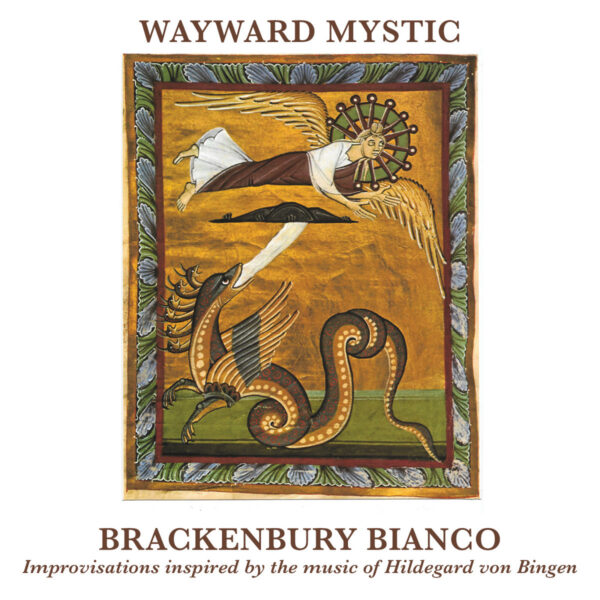
On their Wayward Mystic (DISCUS MUSIC DISCUS 140CD) record, the duo of Brackenbury Bianco have found or invented some musical crossroads where English folk tunes and American free jazz meet up and pay their respects to the music of Hildegard of Bingen, the famous 12th century abbess. I’ve no doubt that violinist Faith Brackenbury has been deeply moved by the music of Hildegard, and she’s probably not the first to find inspiration in the life and work of this exceptional woman. Very extended violin and vocal improvisations based on the original plainchant and hymns of Hildegard are what we hear, propelled endlessly by the tireless drumming of Tony Bianco. Not bad actually. I’ve been listening to Hildegard since 1982 and probably tend to get a bit protective of her beautiful music, but she has been discovered by every new generation, including some who reinvent the sounds as “meditational” or New Age healing music, others who claim the strong-minded abbess as an early exponent of feminism, and even David Tibet – well, heaven knows what goes on in his unique mind. Two CDs of long tracks – feels like the first set adheres more closely to the original forms of monophony and continuum, while the second set heads down a much more free jazz avenue; the duo’s take on ‘Cherubim’s Sword’ is like Leroy Jenkins reborn as an early Catholic priest. Last heard this UK-US duo on their 2021 album Rising Up, which I recall leant more towards high-energy jazz sprints. (30/08/2022)
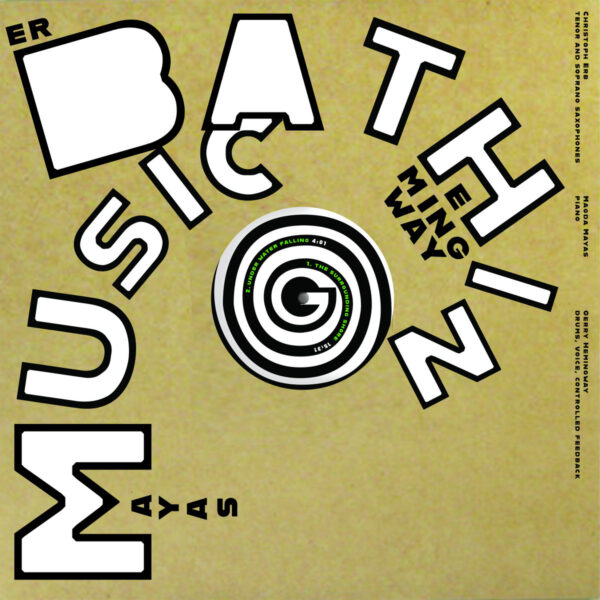
A commonplace observation for sure, but this Bathing Music (VETO-EXCHANGE 019) feels less like improvised jazz and more like an attempt to capture the essence of a pastoral lakeside view, much like Seurat or Manet would attempt with their brushes. The trio of Christoph Erb, Magda Mayas and Gerry Hemingway do it with saxophones, piano, and drums; I expect Mayas’ piano has been “prepared” as she delivers many muffled clonks and chimes. Every droplet of water is clearly audible in this gentle and delicate music, full of light, and the track titles point you to the details of each tableau by means of simple word-painting. A live recording made in 2020 at Lucerne, available as a vinyl LP. (30/08/2022)
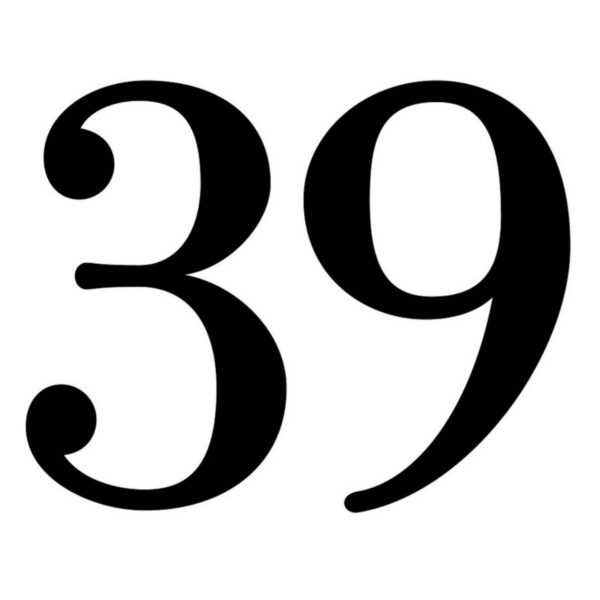
“With this game,” writes Christian Wolfarth, “I wanted to overcome…my musical habits”. He’s talking about his new album 39 (HIDDENBELL RECORDS 013), where this most adventurous of percussionists has all but forsaken his usual drum kit and has elected to play pieces of dead wood, or pine cones. Well, in fact there’s a drum in here somewhere, but it’s those rattling pine cones which you’ll remember and they’ll haunt your sleep for days to come. Besides the unusual instrumentation, the compositional structure and all the details of 39 – divided into three numbered parts – have been pre-determined by Cagean chance methods, involving the roll of a dice. Our man assures us that he did this “according to a strict concept”; and that includes individual elements such as note values, rests, and time signatures. Outside of John Cage (who isn’t actually name-checked as a possible antecedent), I’m more familiar with number structures being used for avant-garde experimental cinema; for instance the UK structuralist-materialists of the 1970s whose work I cite so frequently. Not unknown to some practitioners in that field would be a rule-based or numerical structure that would determine timings, frame counts, focal length, zooms, or f-stop settings on the camera. Not content with adhering doggedly to his game (one track lasts for 26:40 minutes of unvarying and strange polyrhythms), Wolfarth also layers in some field recordings of stones, water, footsteps and church bells, likewise repeated and inserted in line with a numerical rule. (Matter of fact, all of part III seems to be one long church-bell recording extended into infinity with percussive footsteps in the turf.) He adds these events perhaps to leaven the bread and give the ear a little more variety to whittle on. Probably not as testing a record as I’m making it sound; he hasn’t forgotten what he knows about natural dynamics, the notion of questioning your own performative behaviour seems like a very disciplined (if severe) regime to follow, and he does indeed succeed in defining new forms for percussion-based improv. Or at least, he hammers a few pegs in the ground attaches long strings to them as he maps out the area to be built on. (25/08/2022)